

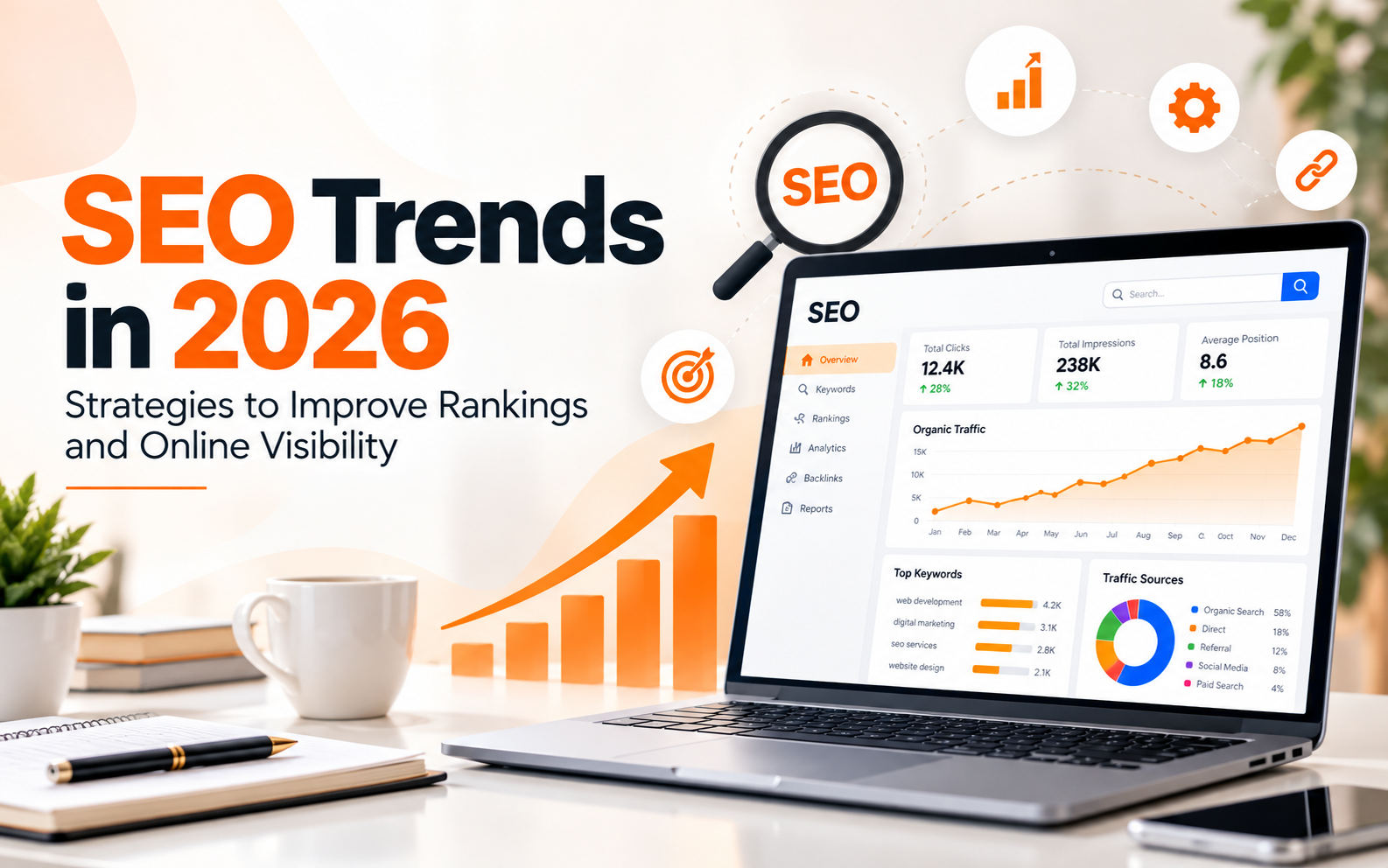
SEO Trends in 2026: Strategies to Improve Rankings and Online Visibility
Discover the latest SEO trends in 2026, including AI-powered search, helpful content, technical SEO, and strategies to improve your website's rankings and online visibility.
SEO Trends in 2026: Strategies to Improve Rankings and Online Visibility
Search engine optimization (SEO) is an essential part of digital marketing for businesses that want to reach more customers online. As search engines evolve and artificial intelligence changes how people discover information, businesses need smarter strategies to improve their online visibility.
In 2026, successful SEO involves more than adding keywords to web pages. It requires helpful content, a technically sound website, a positive user experience, and a strong online presence.
At SJ Solutions & Infotech, we help businesses strengthen their digital presence through professional website development, SEO, and digital marketing solutions.
1. AI-Powered Search and the Future of SEO
Artificial intelligence is changing how people search for information, compare services, and discover businesses. AI-powered search experiences can provide summarized answers and references to relevant sources.
Businesses should create clear, informative content that directly answers their customers' questions.
For example, instead of targeting only the keyword "web development services," a company can answer questions such as:
- How do I choose the right web development company?
- How much does a business website cost?
- What features should a professional website include?
Providing detailed and relevant answers helps visitors understand your expertise and supports a stronger search strategy. However, appearing in AI-generated answers is not guaranteed.
2. High-Quality Content That Meets Search Intent
Content remains an important part of SEO when it provides genuine value to readers. Search intent refers to the reason behind a user's search query.
Businesses should create content that matches what their audience wants to learn, compare, or purchase.
Useful content may include detailed service pages, educational blog articles, practical guides, case studies, and frequently asked questions.
Use descriptive headings, natural keywords, relevant examples, and accurate information. Avoid keyword stuffing and publishing repetitive articles simply to increase content volume.
The goal is to answer customer questions clearly while demonstrating your knowledge and experience.
3. Technical SEO and Website Performance
Technical SEO helps search engines discover, crawl, and understand website pages. It also supports a better experience for visitors.
Important areas to optimize include:
- **Website speed:** Compress images, reduce unnecessary scripts, and configure suitable caching.
- **Mobile responsiveness:** Ensure pages work smoothly across smartphones, tablets, and desktops.
- **Crawlability:** Check robots.txt, XML sitemaps, redirects, and indexing settings.
- **Secure browsing:** Use HTTPS and maintain appropriate website security.
- **Internal linking:** Connect related service pages and blog articles logically.
- **Structured data:** Add accurate schema markup where appropriate to describe your organization and content.
Regular technical audits can help identify issues that affect website accessibility, performance, and search visibility.
4. Mobile-Friendly Website Design
Many customers research businesses using mobile devices. A website that is difficult to navigate on a smartphone can discourage visitors from exploring services or submitting enquiries.
Responsive web design adapts the layout to different screen sizes while keeping content readable and navigation accessible.
Make sure buttons are easy to tap, forms are simple to complete, images are optimized, and important information is easy to find.
A well-designed mobile experience supports your SEO efforts and helps visitors interact with your business more comfortably.
5. Build Brand Authority and Trust
Customers want to work with businesses they can trust. A credible online presence helps visitors understand your services and evaluate your expertise.
Strengthen your website by including:
- Detailed service descriptions.
- Genuine client testimonials.
- Relevant project examples and case studies.
- Clear company information and contact details.
- Accurate author and business profiles.
- Helpful content that demonstrates subject knowledge.
Maintain consistent business information across relevant online platforms and avoid unsupported claims about your experience or results.
Building credibility takes time, but it supports long-term digital growth.
6. Local SEO for Targeted Customers
Local SEO helps businesses improve their visibility for relevant searches in the areas they serve.
Start by maintaining accurate business details, creating useful location-specific service information where appropriate, and managing an eligible Google Business Profile.
Encourage genuine customer reviews and keep your business hours, contact information, and services updated.
Local content should address the actual needs of customers in a particular area instead of repeating nearly identical pages for multiple locations.
These practices help potential customers understand where you operate and how to contact your business.
7. Improve User Experience and Conversions
SEO should help attract relevant visitors, but your website must also make it easy for them to take action.
Use clear navigation, readable content, fast-loading pages, and relevant calls to action. Depending on your business, these actions may include requesting a quote, booking a consultation, or submitting a contact form.
Connect relevant blog articles to your service pages so readers can explore your solutions when they need professional assistance.
For example, an article about website performance can link to your web development services. This creates a natural journey from learning about a problem to exploring a possible solution.
8. Measure SEO Results and Improve Continuously
Tracking performance helps you understand which SEO activities are contributing to your business goals.
Google Search Console can provide information about search impressions, clicks, indexing, and queries. Google Analytics can help you evaluate website traffic and user interactions.
Monitor relevant metrics such as:
- Organic search clicks and impressions.
- Performance of important landing pages.
- Relevant search queries.
- Qualified enquiries and contact form submissions.
- Engagement with service pages and blog content.
- Website speed and technical health.
Review these indicators regularly and use the findings to improve your strategy. Rankings alone do not tell the entire story, so connect SEO performance to meaningful business outcomes.
Why Choose SJ Solutions & Infotech?
SJ Solutions & Infotech provides technology and digital services that help businesses strengthen their online presence. From website development and responsive design to SEO and digital solutions, we focus on creating practical strategies aligned with business objectives.
Whether you are launching a new website or improving an existing one, our team can help you identify opportunities to enhance your digital presence.
Conclusion
SEO in 2026 requires a balanced approach that combines useful content, technical optimization, mobile-friendly design, brand credibility, and ongoing performance analysis.
Businesses that focus on providing genuine value to their audiences can build a stronger foundation for sustainable online visibility.
SJ Solutions & Infotech helps businesses improve their digital presence through professional web development, SEO, and digital marketing solutions.
Ready to improve your website's search visibility? Contact SJ Solutions & Infotech to discuss an SEO strategy tailored to your business.**
Search engine optimization (SEO) is an essential part of digital marketing for businesses that want to reach more customers online. As search engines evolve and artificial intelligence changes how people discover information, businesses need smarter strategies to improve their online visibility.
In 2026, successful SEO involves more than adding keywords to web pages. It requires helpful content, a technically sound website, a positive user experience, and a strong online presence.
At SJ Solutions & Infotech, we help businesses strengthen their digital presence through professional website development, SEO, and digital marketing solutions.
1. AI-Powered Search and the Future of SEO
Artificial intelligence is changing how people search for information, compare services, and discover businesses. AI-powered search experiences can provide summarized answers and references to relevant sources.
Businesses should create clear, informative content that directly answers their customers' questions.
For example, instead of targeting only the keyword "web development services," a company can answer questions such as:
- How do I choose the right web development company?
- How much does a business website cost?
- What features should a professional website include?
Providing detailed and relevant answers helps visitors understand your expertise and supports a stronger search strategy. However, appearing in AI-generated answers is not guaranteed.
2. High-Quality Content That Meets Search Intent
Content remains an important part of SEO when it provides genuine value to readers. Search intent refers to the reason behind a user's search query.
Businesses should create content that matches what their audience wants to learn, compare, or purchase.
Useful content may include detailed service pages, educational blog articles, practical guides, case studies, and frequently asked questions.
Use descriptive headings, natural keywords, relevant examples, and accurate information. Avoid keyword stuffing and publishing repetitive articles simply to increase content volume.
The goal is to answer customer questions clearly while demonstrating your knowledge and experience.
3. Technical SEO and Website Performance
Technical SEO helps search engines discover, crawl, and understand website pages. It also supports a better experience for visitors.
Important areas to optimize include:
- **Website speed:** Compress images, reduce unnecessary scripts, and configure suitable caching.
- **Mobile responsiveness:** Ensure pages work smoothly across smartphones, tablets, and desktops.
- **Crawlability:** Check robots.txt, XML sitemaps, redirects, and indexing settings.
- **Secure browsing:** Use HTTPS and maintain appropriate website security.
- **Internal linking:** Connect related service pages and blog articles logically.
- **Structured data:** Add accurate schema markup where appropriate to describe your organization and content.
Regular technical audits can help identify issues that affect website accessibility, performance, and search visibility.
4. Mobile-Friendly Website Design
Many customers research businesses using mobile devices. A website that is difficult to navigate on a smartphone can discourage visitors from exploring services or submitting enquiries.
Responsive web design adapts the layout to different screen sizes while keeping content readable and navigation accessible.
Make sure buttons are easy to tap, forms are simple to complete, images are optimized, and important information is easy to find.
A well-designed mobile experience supports your SEO efforts and helps visitors interact with your business more comfortably.
5. Build Brand Authority and Trust
Customers want to work with businesses they can trust. A credible online presence helps visitors understand your services and evaluate your expertise.
Strengthen your website by including:
- Detailed service descriptions.
- Genuine client testimonials.
- Relevant project examples and case studies.
- Clear company information and contact details.
- Accurate author and business profiles.
- Helpful content that demonstrates subject knowledge.
Maintain consistent business information across relevant online platforms and avoid unsupported claims about your experience or results.
Building credibility takes time, but it supports long-term digital growth.
6. Local SEO for Targeted Customers
Local SEO helps businesses improve their visibility for relevant searches in the areas they serve.
Start by maintaining accurate business details, creating useful location-specific service information where appropriate, and managing an eligible Google Business Profile.
Encourage genuine customer reviews and keep your business hours, contact information, and services updated.
Local content should address the actual needs of customers in a particular area instead of repeating nearly identical pages for multiple locations.
These practices help potential customers understand where you operate and how to contact your business.
7. Improve User Experience and Conversions
SEO should help attract relevant visitors, but your website must also make it easy for them to take action.
Use clear navigation, readable content, fast-loading pages, and relevant calls to action. Depending on your business, these actions may include requesting a quote, booking a consultation, or submitting a contact form.
Connect relevant blog articles to your service pages so readers can explore your solutions when they need professional assistance.
For example, an article about website performance can link to your web development services. This creates a natural journey from learning about a problem to exploring a possible solution.
8. Measure SEO Results and Improve Continuously
Tracking performance helps you understand which SEO activities are contributing to your business goals.
Google Search Console can provide information about search impressions, clicks, indexing, and queries. Google Analytics can help you evaluate website traffic and user interactions.
Monitor relevant metrics such as:
- Organic search clicks and impressions.
- Performance of important landing pages.
- Relevant search queries.
- Qualified enquiries and contact form submissions.
- Engagement with service pages and blog content.
- Website speed and technical health.
Review these indicators regularly and use the findings to improve your strategy. Rankings alone do not tell the entire story, so connect SEO performance to meaningful business outcomes.
Why Choose SJ Solutions & Infotech?
SJ Solutions & Infotech provides technology and digital services that help businesses strengthen their online presence. From website development and responsive design to SEO and digital solutions, we focus on creating practical strategies aligned with business objectives.
Whether you are launching a new website or improving an existing one, our team can help you identify opportunities to enhance your digital presence.
Conclusion
SEO in 2026 requires a balanced approach that combines useful content, technical optimization, mobile-friendly design, brand credibility, and ongoing performance analysis.
Businesses that focus on providing genuine value to their audiences can build a stronger foundation for sustainable online visibility.
SJ Solutions & Infotech helps businesses improve their digital presence through professional web development, SEO, and digital marketing solutions.
Ready to improve your website's search visibility? Contact SJ Solutions & Infotech to discuss an SEO strategy tailored to your business.**