

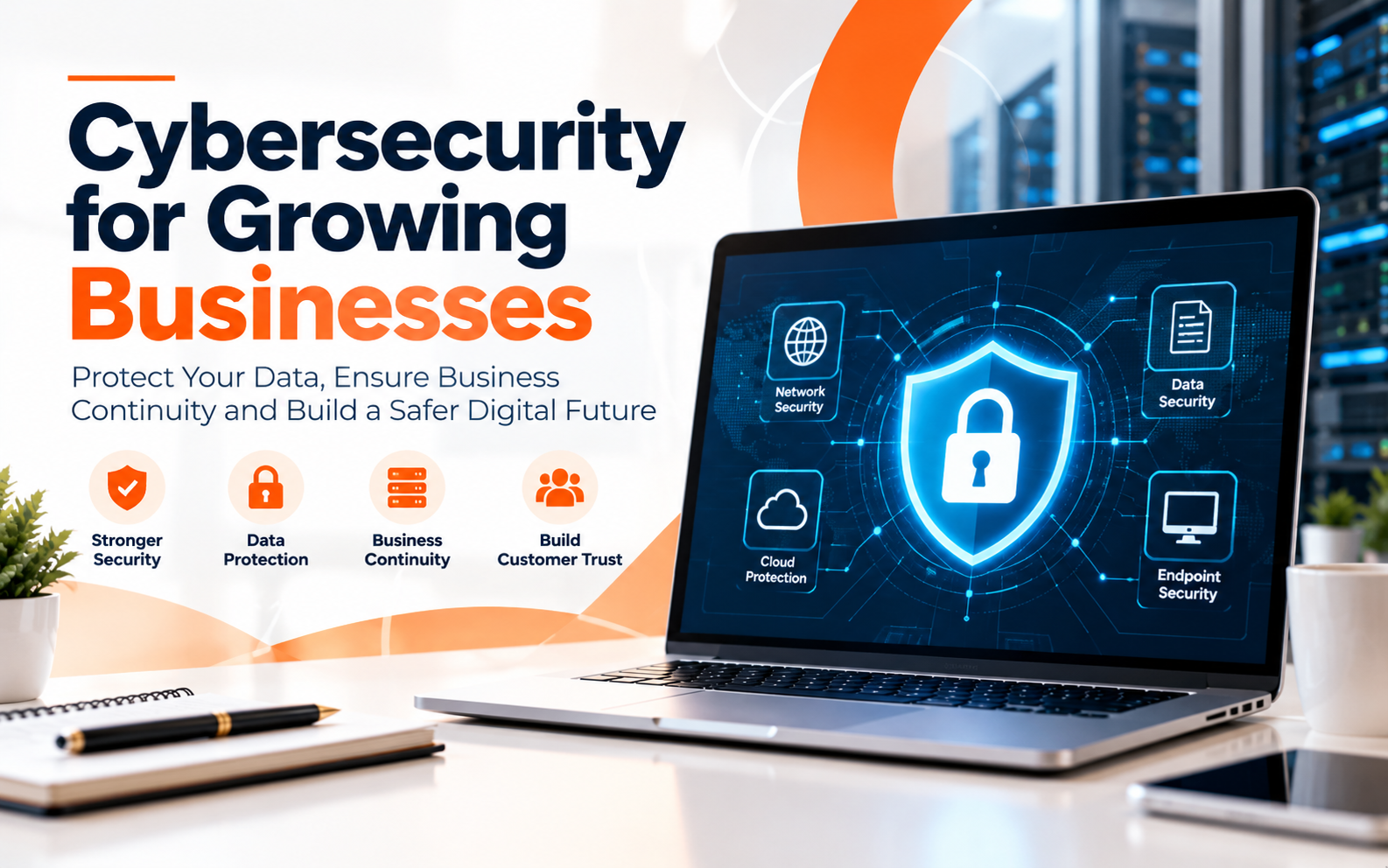
Cybersecurity for Growing Businesses: Protect Your Digital Assets
Discover how cybersecurity helps growing businesses protect sensitive data, prevent digital threats, secure business systems, and build customer trust with practical security strategies.
# Cybersecurity for Growing Businesses: Protect Your Digital Assets
As businesses increasingly rely on websites, cloud platforms, digital communication, and online transactions, protecting digital assets has become an essential part of business operations. Cybersecurity helps organizations safeguard sensitive information, reduce security risks, and maintain the trust of their customers.
Growing businesses can be particularly vulnerable when security measures do not keep pace with new employees, expanding systems, and increasing amounts of digital information.
Cybersecurity is not only a technical responsibility. It is a business priority that supports operational continuity, customer confidence, and long-term growth.
At SJ Solutions & Infotech, we recognize the importance of reliable technology and secure digital environments. Understanding common threats and adopting appropriate security practices can help businesses build a stronger foundation for digital success.
## 1. What Is Cybersecurity?
Cybersecurity refers to the technologies, processes, and practices used to protect computers, networks, applications, and digital information from unauthorized access, attacks, damage, or disruption.
It includes several areas of protection, such as network security, endpoint security, data protection, access management, and cloud security.
For a growing business, cybersecurity may involve securing employee devices, protecting customer information, maintaining website security, controlling access to company systems, and preparing for unexpected incidents.
The right approach depends on the organization's size, industry, technical environment, and the sensitivity of the information it manages.
## 2. Understand Common Cybersecurity Threats
Businesses face different types of digital threats. Understanding these risks is the first step towards creating a more secure environment.
### Phishing attacks
Phishing involves fraudulent emails, messages, or websites designed to trick people into revealing sensitive information or downloading malicious files.
Employees should learn to identify suspicious links, unexpected attachments, unusual payment requests, and messages that create a false sense of urgency.
### Ransomware and malware
Malware is software designed to damage systems, steal information, or perform unauthorized activities. Ransomware can encrypt important files and demand payment for their recovery.
Regular software updates, endpoint protection, access restrictions, and reliable offline or immutable backups can help reduce risk and improve recovery options.
### Weak passwords and compromised accounts
Weak or reused passwords can make business accounts easier to compromise.
Use unique passwords, a reputable password manager, and multifactor authentication wherever possible. Restrict administrative privileges and remove access when employees no longer need it.
### Data breaches
A data breach can expose customer information, financial records, business documents, or confidential communications.
Businesses should limit access to sensitive data, monitor important systems, use appropriate encryption, and establish clear procedures for handling information.
### Website and application vulnerabilities
Outdated software, insecure configurations, and poorly protected forms can create opportunities for attackers.
Regular updates, security testing, access controls, and appropriate web application protections can help reduce these vulnerabilities.
## 3. Protect Sensitive Business Data
Business information is one of an organization's most valuable digital assets. Customer details, employee records, financial information, intellectual property, and internal documents all require appropriate protection.
Start by identifying the information your business collects and where it is stored. Determine who needs access and establish suitable permissions.
Important data protection practices include:
- Restricting access according to job responsibilities.
- Using encryption where appropriate.
- Maintaining reliable backups.
- Applying secure data retention and deletion practices.
- Protecting sensitive information during transmission.
- Reviewing access permissions regularly.
Businesses should also follow applicable privacy laws and contractual requirements relevant to the information they process.
A structured approach to data protection helps reduce unnecessary exposure and improves accountability.
## 4. Strengthen Passwords and Access Security
Account security is an important part of a cybersecurity strategy because compromised credentials can provide attackers with access to business systems.
Require strong, unique passwords for important accounts and enable multifactor authentication, especially for email, cloud services, administrative accounts, and remote access.
Where possible, use role-based access controls so employees receive only the permissions necessary to perform their work.
Additional practices include reviewing login activity, removing inactive accounts, protecting recovery methods, and avoiding shared administrator credentials.
These measures help limit unauthorized access and reduce the potential impact of compromised accounts.
5. Secure Business Networks and Devices
Employees use laptops, desktop computers, smartphones, servers, and other connected devices to access company information. Each device can introduce security risks if it is not properly maintained.
Businesses should establish a consistent approach to device and network security.
Consider implementing:
- Updated operating systems and applications.
- Endpoint protection appropriate to business requirements.
- Firewalls and secure network configurations.
- Separate guest and business network access where appropriate.
- Secure remote access solutions.
- Device encryption and screen-lock policies.
- Centralized device management for larger environments.
Personal devices used for business purposes should follow suitable security requirements.
Regular monitoring and maintenance can help identify weaknesses before they become more serious problems.
## 6. Improve Cloud Security
Cloud services support file storage, collaboration, business applications, and remote work. However, cloud adoption does not automatically make information secure.
Businesses must configure services correctly and manage user access carefully.
Important cloud security practices include enabling multifactor authentication, reviewing sharing permissions, protecting administrator accounts, monitoring activity, and maintaining appropriate backup arrangements.
Avoid publicly exposing confidential files or allowing unrestricted access to sensitive folders.
Businesses should also understand their cloud provider's security responsibilities and the controls that remain their own responsibility.
A well-managed cloud environment helps teams collaborate while maintaining appropriate protection for business information.
## 7. Train Employees to Recognize Security Risks
Technology alone cannot eliminate cybersecurity risks. Employee awareness is essential because many attacks exploit human behaviour, trust, or mistakes.
Provide regular training on recognizing phishing attempts, handling sensitive information, using secure passwords, and reporting suspicious activity.
Employees should understand how to verify unusual requests involving payments, account access, or confidential documents.
Create a simple reporting process so staff can raise concerns quickly without fear of blame.
Practical training and clear security policies help employees make safer decisions during everyday work.
## 8. Create a Reliable Backup and Recovery Plan
Cyber incidents, hardware failures, accidental deletion, and service disruptions can make important information unavailable.
A backup and recovery plan helps businesses restore critical data and resume operations.
Identify which systems and files are most important, determine how frequently they should be backed up, and establish recovery priorities.
Keep backup copies protected from unauthorized changes and ensure that at least one suitable backup remains isolated or immutable where feasible.
Most importantly, test restoration procedures regularly. A backup is only useful if the business can recover the required information when it is needed.
Document recovery responsibilities and maintain a plan for communicating during disruptions.
## 9. Develop a Cybersecurity Incident Response Plan
Even with preventive measures, security incidents can still occur. A response plan helps the business act quickly and consistently when something goes wrong.
Your plan should identify the people responsible for responding, the systems that need to be protected, and the steps required to investigate and contain an incident.
Typical response activities may include isolating affected devices, securing compromised accounts, preserving relevant evidence, contacting appropriate technical specialists, and restoring systems from trusted backups.
Depending on the incident, businesses may also need to notify affected parties, regulators, insurers, or law enforcement in accordance with applicable requirements.
Review and test the plan periodically so employees understand their responsibilities before an incident occurs.
## 10. Why Cybersecurity Matters for Business Growth
Cybersecurity supports more than technical protection. It also contributes to business resilience and customer confidence.
### Protect customer trust
Customers expect businesses to handle their information responsibly. Appropriate security controls help reduce the risk of unauthorized access and data exposure.
### Reduce operational disruption
Security incidents can interrupt access to systems, delay work, and affect customer service. Preparation and recovery planning help businesses respond more effectively.
### Support business continuity
Reliable backups, documented procedures, and incident response plans help organizations recover from unexpected events.
### Protect business reputation
A serious security incident can affect customer relationships and confidence. Preventive measures and transparent incident handling can help businesses manage risk.
### Support responsible growth
As businesses adopt new applications, add employees, and expand their digital operations, security practices should evolve alongside them.
Cybersecurity cannot eliminate every threat, but a structured and regularly reviewed program can improve preparedness and reduce avoidable risks.
## Why Choose SJ Solutions & Infotech?
SJ Solutions & Infotech helps businesses strengthen their digital presence through professional IT services, web development, and technology solutions.
We understand that reliable business technology requires careful planning, ongoing maintenance, and attention to security. Our goal is to help businesses identify suitable technology solutions that support their operational requirements and long-term objectives.
Whether you are improving an existing website, expanding your IT infrastructure, or reviewing your digital security needs, choosing the right technical approach is an important step towards sustainable growth.
## Conclusion
Cybersecurity is an essential consideration for businesses that depend on digital systems, customer information, and online operations.
By strengthening account security, protecting devices, securing cloud services, training employees, maintaining backups, and preparing for incidents, businesses can build a more resilient digital environment.
Effective cybersecurity requires ongoing attention rather than a one-time installation. Regular reviews and improvements help organizations respond to changing risks and business requirements.
SJ Solutions & Infotech is committed to helping businesses make informed technology decisions and develop a stronger digital foundation.
**Ready to strengthen your business technology? Contact SJ Solutions & Infotech to discuss your IT requirements and explore suitable solutions for your organization.**
As businesses increasingly rely on websites, cloud platforms, digital communication, and online transactions, protecting digital assets has become an essential part of business operations. Cybersecurity helps organizations safeguard sensitive information, reduce security risks, and maintain the trust of their customers.
Growing businesses can be particularly vulnerable when security measures do not keep pace with new employees, expanding systems, and increasing amounts of digital information.
Cybersecurity is not only a technical responsibility. It is a business priority that supports operational continuity, customer confidence, and long-term growth.
At SJ Solutions & Infotech, we recognize the importance of reliable technology and secure digital environments. Understanding common threats and adopting appropriate security practices can help businesses build a stronger foundation for digital success.
## 1. What Is Cybersecurity?
Cybersecurity refers to the technologies, processes, and practices used to protect computers, networks, applications, and digital information from unauthorized access, attacks, damage, or disruption.
It includes several areas of protection, such as network security, endpoint security, data protection, access management, and cloud security.
For a growing business, cybersecurity may involve securing employee devices, protecting customer information, maintaining website security, controlling access to company systems, and preparing for unexpected incidents.
The right approach depends on the organization's size, industry, technical environment, and the sensitivity of the information it manages.
## 2. Understand Common Cybersecurity Threats
Businesses face different types of digital threats. Understanding these risks is the first step towards creating a more secure environment.
### Phishing attacks
Phishing involves fraudulent emails, messages, or websites designed to trick people into revealing sensitive information or downloading malicious files.
Employees should learn to identify suspicious links, unexpected attachments, unusual payment requests, and messages that create a false sense of urgency.
### Ransomware and malware
Malware is software designed to damage systems, steal information, or perform unauthorized activities. Ransomware can encrypt important files and demand payment for their recovery.
Regular software updates, endpoint protection, access restrictions, and reliable offline or immutable backups can help reduce risk and improve recovery options.
### Weak passwords and compromised accounts
Weak or reused passwords can make business accounts easier to compromise.
Use unique passwords, a reputable password manager, and multifactor authentication wherever possible. Restrict administrative privileges and remove access when employees no longer need it.
### Data breaches
A data breach can expose customer information, financial records, business documents, or confidential communications.
Businesses should limit access to sensitive data, monitor important systems, use appropriate encryption, and establish clear procedures for handling information.
### Website and application vulnerabilities
Outdated software, insecure configurations, and poorly protected forms can create opportunities for attackers.
Regular updates, security testing, access controls, and appropriate web application protections can help reduce these vulnerabilities.
## 3. Protect Sensitive Business Data
Business information is one of an organization's most valuable digital assets. Customer details, employee records, financial information, intellectual property, and internal documents all require appropriate protection.
Start by identifying the information your business collects and where it is stored. Determine who needs access and establish suitable permissions.
Important data protection practices include:
- Restricting access according to job responsibilities.
- Using encryption where appropriate.
- Maintaining reliable backups.
- Applying secure data retention and deletion practices.
- Protecting sensitive information during transmission.
- Reviewing access permissions regularly.
Businesses should also follow applicable privacy laws and contractual requirements relevant to the information they process.
A structured approach to data protection helps reduce unnecessary exposure and improves accountability.
## 4. Strengthen Passwords and Access Security
Account security is an important part of a cybersecurity strategy because compromised credentials can provide attackers with access to business systems.
Require strong, unique passwords for important accounts and enable multifactor authentication, especially for email, cloud services, administrative accounts, and remote access.
Where possible, use role-based access controls so employees receive only the permissions necessary to perform their work.
Additional practices include reviewing login activity, removing inactive accounts, protecting recovery methods, and avoiding shared administrator credentials.
These measures help limit unauthorized access and reduce the potential impact of compromised accounts.
5. Secure Business Networks and Devices
Employees use laptops, desktop computers, smartphones, servers, and other connected devices to access company information. Each device can introduce security risks if it is not properly maintained.
Businesses should establish a consistent approach to device and network security.
Consider implementing:
- Updated operating systems and applications.
- Endpoint protection appropriate to business requirements.
- Firewalls and secure network configurations.
- Separate guest and business network access where appropriate.
- Secure remote access solutions.
- Device encryption and screen-lock policies.
- Centralized device management for larger environments.
Personal devices used for business purposes should follow suitable security requirements.
Regular monitoring and maintenance can help identify weaknesses before they become more serious problems.
## 6. Improve Cloud Security
Cloud services support file storage, collaboration, business applications, and remote work. However, cloud adoption does not automatically make information secure.
Businesses must configure services correctly and manage user access carefully.
Important cloud security practices include enabling multifactor authentication, reviewing sharing permissions, protecting administrator accounts, monitoring activity, and maintaining appropriate backup arrangements.
Avoid publicly exposing confidential files or allowing unrestricted access to sensitive folders.
Businesses should also understand their cloud provider's security responsibilities and the controls that remain their own responsibility.
A well-managed cloud environment helps teams collaborate while maintaining appropriate protection for business information.
## 7. Train Employees to Recognize Security Risks
Technology alone cannot eliminate cybersecurity risks. Employee awareness is essential because many attacks exploit human behaviour, trust, or mistakes.
Provide regular training on recognizing phishing attempts, handling sensitive information, using secure passwords, and reporting suspicious activity.
Employees should understand how to verify unusual requests involving payments, account access, or confidential documents.
Create a simple reporting process so staff can raise concerns quickly without fear of blame.
Practical training and clear security policies help employees make safer decisions during everyday work.
## 8. Create a Reliable Backup and Recovery Plan
Cyber incidents, hardware failures, accidental deletion, and service disruptions can make important information unavailable.
A backup and recovery plan helps businesses restore critical data and resume operations.
Identify which systems and files are most important, determine how frequently they should be backed up, and establish recovery priorities.
Keep backup copies protected from unauthorized changes and ensure that at least one suitable backup remains isolated or immutable where feasible.
Most importantly, test restoration procedures regularly. A backup is only useful if the business can recover the required information when it is needed.
Document recovery responsibilities and maintain a plan for communicating during disruptions.
## 9. Develop a Cybersecurity Incident Response Plan
Even with preventive measures, security incidents can still occur. A response plan helps the business act quickly and consistently when something goes wrong.
Your plan should identify the people responsible for responding, the systems that need to be protected, and the steps required to investigate and contain an incident.
Typical response activities may include isolating affected devices, securing compromised accounts, preserving relevant evidence, contacting appropriate technical specialists, and restoring systems from trusted backups.
Depending on the incident, businesses may also need to notify affected parties, regulators, insurers, or law enforcement in accordance with applicable requirements.
Review and test the plan periodically so employees understand their responsibilities before an incident occurs.
## 10. Why Cybersecurity Matters for Business Growth
Cybersecurity supports more than technical protection. It also contributes to business resilience and customer confidence.
### Protect customer trust
Customers expect businesses to handle their information responsibly. Appropriate security controls help reduce the risk of unauthorized access and data exposure.
### Reduce operational disruption
Security incidents can interrupt access to systems, delay work, and affect customer service. Preparation and recovery planning help businesses respond more effectively.
### Support business continuity
Reliable backups, documented procedures, and incident response plans help organizations recover from unexpected events.
### Protect business reputation
A serious security incident can affect customer relationships and confidence. Preventive measures and transparent incident handling can help businesses manage risk.
### Support responsible growth
As businesses adopt new applications, add employees, and expand their digital operations, security practices should evolve alongside them.
Cybersecurity cannot eliminate every threat, but a structured and regularly reviewed program can improve preparedness and reduce avoidable risks.
## Why Choose SJ Solutions & Infotech?
SJ Solutions & Infotech helps businesses strengthen their digital presence through professional IT services, web development, and technology solutions.
We understand that reliable business technology requires careful planning, ongoing maintenance, and attention to security. Our goal is to help businesses identify suitable technology solutions that support their operational requirements and long-term objectives.
Whether you are improving an existing website, expanding your IT infrastructure, or reviewing your digital security needs, choosing the right technical approach is an important step towards sustainable growth.
## Conclusion
Cybersecurity is an essential consideration for businesses that depend on digital systems, customer information, and online operations.
By strengthening account security, protecting devices, securing cloud services, training employees, maintaining backups, and preparing for incidents, businesses can build a more resilient digital environment.
Effective cybersecurity requires ongoing attention rather than a one-time installation. Regular reviews and improvements help organizations respond to changing risks and business requirements.
SJ Solutions & Infotech is committed to helping businesses make informed technology decisions and develop a stronger digital foundation.
**Ready to strengthen your business technology? Contact SJ Solutions & Infotech to discuss your IT requirements and explore suitable solutions for your organization.**